





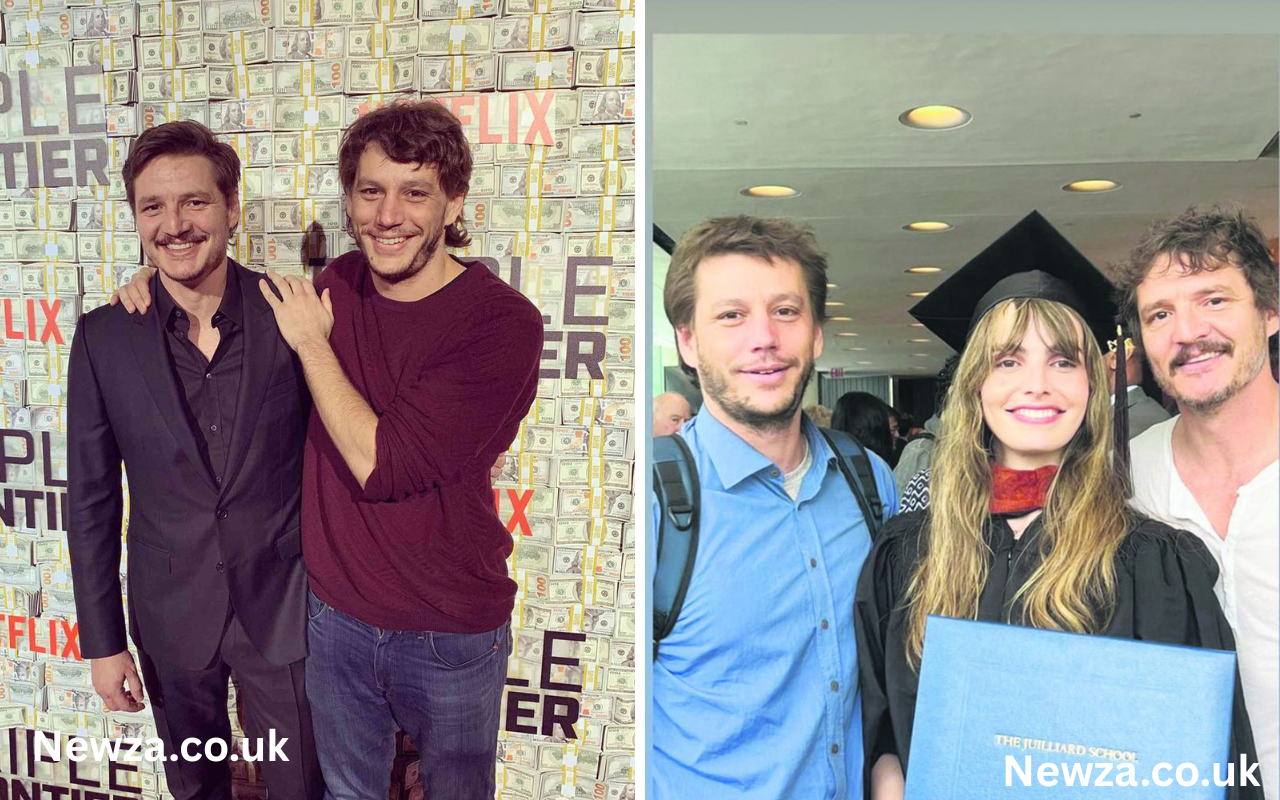
Nicolás Balmaceda Pascal: The Dedicated Pediatric Neurologist Choosing Healing Over Hollywood Fame
While millions of fans recognize Pedro Pascal from his iconic roles in “The Mandalorian” and “The Last of Us,” few know about his younger brother who operates far from the flashing cameras of Hollywood. Nicolás Balmaceda Pascal represents a different kind of success story, one measured in medical breakthroughs rather than box office records. Born into a family that fled political persecution in Chile and rebuilt their lives across continents, Nicolás chose a path defined by scientific inquiry and compassionate care. His decision to pursue pediatric neurology, one of the most demanding medical specialties, reveals a man driven by intellectual curiosity and a genuine desire to ease suffering. Unlike his siblings who shape culture through film and television, Nicolás
The Pascal family’s journey from Santiago, Chile, to the United States instilled in all four children a profound understanding of sacrifice and resilience. Verónica Pascal Ureta and José Balmaceda Riera raised their children to value education, empathy, and social responsibility above material success. When the family fled the Pinochet dictatorship, they carried little more than their principles and their determination to build a better life. Nicolás absorbed these lessons deeply, translating them into a career dedicated entirely to others. While his sister Javiera earned an Oscar nomination for producing “Argentina, 1985” and his sister Lux became a celebrated actress and transgender rights advocate, Nicolás quietly pursued medical training. His work rarely makes headlines, but it touches lives in ways that statistics cannot capture, offering hope to families navigating terrifying diagnoses.
The contrast between Nicolás and his famous brother Pedro could not be more striking, yet the mutual respect between them runs deep. Pedro has often joked that Nicolás is the smarter, more handsome sibling, a teasing acknowledgment of the demanding path his brother chose. In a heartfelt Instagram post celebrating Nicolás’s birthday, Pedro described him as someone who “hates attention and loves doing good,” a phrase that perfectly captures the essence of this private medical professional. While Pedro spends months on film sets and walks red carpets in designer suits, Nicolás wears a white coat and spends long hours studying the complexities of developing brains. Both brothers serve others, but their arenas could not be more different. One fights fictional enemies; the other battles very real neurological disorders affecting children.
The Family’s Chilean Exile and Its Influence on Nicolás’s Values
Understanding Nicolás Balmaceda Pascal requires understanding the political turmoil that shaped his parents’ generation. José Balmaceda Riera and Verónica Pascal Ureta actively opposed Augusto Pinochet’s brutal dictatorship, which seized power in Chile in 1973. Their activism placed them in grave danger, forcing them to flee their homeland to protect their young family. They first sought refuge in Denmark before eventually relocating to the United States, settling first in San Antonio, Texas, and later in Orange County, California. This experience of displacement and rebuilding taught the Pascal children that safety and freedom come at a cost, a lesson that influenced each sibling’s career choices in profound ways. For Nicolás, this background likely reinforced the value of service over self-promotion.
While Pedro and Javiera were born in Santiago before the family’s exile, Nicolás represents a slightly different chapter in the Pascal story. After spending time in the United States, Nicolás and his younger sister Lux eventually returned to Chile with their parents, reconnecting with their Latin American heritage. This bicultural upbringing gave Nicolás a unique perspective, allowing him to navigate different worlds while maintaining a strong sense of identity. He experienced life in both the United States and Chile, understanding the privileges and challenges of each country. This background likely contributes to his grounded nature and his ability to focus deeply on his work without being distracted by the fame surrounding his siblings. He knows who he is and what matters to him, a clarity that many people never achieve.
The values instilled by exile and resilience manifest clearly in Nicolás’s choice of pediatric neurology as his life’s work. Helping children with neurological disorders requires patience, compassion, and a long-term commitment to improvement, qualities that mirror the persistence his parents showed in building a new life from nothing. Pediatric neurologists often work with children facing chronic conditions like epilepsy, cerebral palsy, muscular dystrophy, and autism spectrum disorders. These conditions have no quick fixes or easy solutions. Instead, they demand ongoing care, research, and emotional support for entire families. Nicolás embraced this challenge fully, understanding that meaningful change rarely happens overnight. His parents taught him that courage means standing up for what is right even when the odds seem impossible, and he applies that same courage to every patient he serves.
The Rigorous Path to Becoming a Pediatric Neurologist
The journey to earning a PhD in pediatric neurology represents one of the most demanding educational paths in modern medicine. Aspiring pediatric neurologists must first complete undergraduate studies with exceptional grades, followed by medical school, then a pediatric residency, and finally a specialized fellowship in child neurology. This process typically takes over a decade of post-secondary education and training, requiring immense intellectual stamina and personal sacrifice. Nicolás committed himself to this grueling path without seeking shortcuts or leveraging his family’s growing fame for personal advantage. His dedication speaks to a work ethic that prioritizes mastery over recognition, substance over spectacle. Each step brought him closer to the goal of helping children whose neurological conditions might otherwise rob them of full, joyful lives.
During his training, Nicolás would have encountered some of the most heartbreaking cases imaginable, including children with brain tumors, traumatic brain injuries from accidents, degenerative neurological diseases, and severe epilepsy that resists standard treatments. These cases test not only medical knowledge but also emotional resilience. A pediatric neurologist must deliver difficult diagnoses to parents while simultaneously offering hope and practical guidance. Nicolás chose this field knowing full well the emotional weight it would carry. Unlike his brother Pedro, who can leave his character behind when the director yells cut, Nicolás carries his patients’ stories with him long after clinic hours end. This emotional labor remains invisible to the public, unrecognized by awards shows or entertainment media, yet it constitutes the very heart of his professional identity.
Beyond clinical training, Nicolás’s pursuit of a PhD indicates a commitment to advancing medical knowledge through original research. Pediatric neurology remains a relatively young field, with many fundamental questions still unanswered. Why do certain genetic mutations cause devastating developmental delays in some children but not others? How can early intervention improve outcomes for babies showing signs of cerebral palsy? What new therapies might reduce seizure frequency in medication-resistant epilepsy? These questions drive Nicolás’s research, which likely involves laboratory work, clinical trials, data analysis, and scholarly publications. His contributions to medical literature may never appear on bestseller lists, but they could influence treatment protocols for decades to come. This quiet, incremental progress defines scientific medicine, a far cry from the instant gratification of film production or social media virality.
Pedro Pascal’s Public Pride in His Brother’s Accomplishments
The affectionate relationship between Pedro Pascal and his brother Nicolás occasionally spills into public view, offering fans a rare glimpse of their bond. In 2019, Pedro took to Instagram to celebrate Nicolás’s birthday with a post that quickly captured the attention of his millions of followers. He jokingly claimed he was “punishing” his younger brother for being smarter and more handsome by revealing that Nicolás was pursuing a PhD and becoming a doctor. The post included the playful nickname “Dr. Guapo,” which translates to Dr. Handsome, a term that perfectly blends sibling teasing with genuine admiration. This moment revealed that despite their vastly different career paths, the Pascal brothers share a warm, humorous relationship built on mutual respect and inside jokes.
Pedro’s willingness to share his brother’s accomplishments with the world, even briefly, highlights an important family dynamic. In an industry where many celebrities treat their relatives as extensions of their brand, Pedro instead positions Nicolás as someone worthy of recognition on his own terms. He did not ask Nicolás to appear in a movie or leverage his fame for personal gain. Instead, he simply expressed pride in his brother’s hard work and intelligence, acknowledging that Nicolás’s path is in many ways more difficult and admirable than his own. This humility from one of Hollywood’s biggest stars speaks volumes about the Pascal family’s values. Success, in their household, is not measured by wealth or visibility but by dedication to something larger than oneself.
The public reaction to Pedro’s post about Nicolás revealed widespread curiosity about the private family members of famous actors. Fans flooded the comments with questions and expressions of admiration, eager to learn more about the mysterious “Dr. Guapo.” However, Nicolás did not suddenly create social media accounts or seek out media interviews. He remained true to his nature, retreating back into the privacy of his academic and medical work. This refusal to capitalize on his brother’s fame demonstrates remarkable integrity and self-possession. Many people, given the same opportunity, would chase the spotlight for even a moment. Nicolás chose instead to focus on his patients and his research, proving that his commitment to medicine runs deeper than any fleeting temptation of celebrity.
How Nicolás Maintains Privacy in an Age of Oversharing
Living as the sibling of a global superstar presents unique challenges, particularly for someone who values privacy as much as Nicolás Balmaceda Pascal does. In the modern digital age, where personal information spreads instantly across social media platforms, maintaining anonymity requires deliberate effort and firm boundaries. Nicolás has successfully kept his personal life, including details about his relationships, daily routines, and specific workplace, entirely out of the public eye. He maintains no known public social media accounts, avoiding the platforms where his siblings engage with millions of followers. This absence is not accidental but strategic, a conscious choice to protect his professional credibility and personal peace. In medicine, a low public profile allows practitioners to focus entirely on patient care without the distraction of public opinion or fan attention.
The contrast between Nicolás’s invisibility and his siblings’ visibility could not be more pronounced. Javiera Balmaceda Pascal, as an Amazon Studios executive and Oscar-nominated producer, attends industry events and gives interviews about her work. Lux Pascal shares her journey as a transgender actress and activist with a growing audience of supporters. Pedro Pascal appears on magazine covers, talks shows, and fan conventions around the world. Nicolás, meanwhile, likely spends his days in hospitals, laboratories, or university settings where his famous last name carries no weight. Colleagues may know he has a famous brother, but professional medical environments prioritize competence and compassion over celebrity connections. This allows Nicolás to be evaluated solely on his own merits, a freedom that many celebrity-adjacent individuals never experience.
His family fully supports his desire for privacy, never pushing him into the spotlight or using him as a publicity tool. Pedro’s Instagram posts about Nicolás remain rare and carefully measured, celebrating milestones without exposing too much personal information. The Pascal siblings understand that each family member has the right to define their own relationship with public attention. For Nicolás, that relationship is virtually nonexistent, and his siblings respect this boundary completely. This mutual respect allows the family to remain close across geographical distances and vastly different career paths. They can celebrate each other’s achievements without demanding conformity to a single standard of success. Nicolás contributes to family gatherings not as “Pedro’s brother the doctor” but simply as Nicolás, a beloved sibling who chose healing over headlines.
The Intellectual Demands of Pediatric Neurology Research
Pediatric neurology sits at the intersection of several challenging scientific disciplines, including neurobiology, genetics, developmental psychology, and pharmacology. Practitioners must understand how the brain forms, grows, and sometimes malfunctions from infancy through adolescence. This requires mastery of an enormous body of medical knowledge that continues to expand as research advances. Nicolás’s pursuit of a PhD indicates that he has not merely mastered existing knowledge but actively contributes to creating new knowledge. His research likely focuses on a specific aspect of pediatric neurological disorders, such as understanding how certain genetic mutations disrupt normal brain development or identifying biomarkers that predict which children will respond to particular treatments. This level of specialization demands years of focused effort and a tolerance for slow, incremental progress.
The daily reality of a pediatric neurology PhD candidate involves a mixture of clinical rotations, laboratory experiments, data analysis, academic writing, and teaching responsibilities. Nicolás might spend mornings examining young patients in a hospital clinic, afternoons running experiments in a neuroscience lab, and evenings analyzing results or drafting manuscripts for peer-reviewed journals. Unlike acting, which requires intense bursts of creative energy followed by downtime between projects, medical research demands consistent, sustained effort over many years. A single research paper can take eighteen months from initial experiment to final publication, with no guarantee of acceptance. This slow pace can frustrate those accustomed to immediate feedback, but it also builds character and resilience. Nicolás clearly possesses the patience and persistence that this career requires.
Important contributions from pediatric neurology research have dramatically improved outcomes for children with previously devastating conditions. For example, advances in understanding epileptic encephalopathies have led to targeted treatments that reduce seizure frequency and improve cognitive outcomes. Research into spinal muscular atrophy has produced gene therapies that can halt disease progression when administered early. Studies of cerebral palsy have developed early intervention protocols that maximize mobility and independence. Nicolás works within this tradition of life-changing research, potentially contributing to the next breakthrough that will help children live fuller, healthier lives. His name may never appear in entertainment news, but it could appear in medical journals that shape clinical practice worldwide. That legacy, built on rigorous science and genuine compassion, rivals any artistic achievement.
Balancing Family Connections with Professional Independence
Navigating the complexities of a famous family while maintaining professional independence requires emotional intelligence and clear boundaries. Nicolás Balmaceda Pascal has managed this balance with remarkable skill, remaining close to his siblings without allowing their fame to overshadow his identity. He attends family gatherings, celebrates milestones, and presumably offers the same support to his siblings that they offer him. However, he does not leverage their connections for career advancement or seek introductions to wealthy donors who might fund his research. His professional network consists of mentors, colleagues, and collaborators within the medical and scientific communities, not Hollywood agents or studio executives. This separation protects his work from accusations of nepotism and ensures that his achievements stand entirely on their own merit.
The medical field generally operates with different values than the entertainment industry, which likely helps Nicolás maintain his independence. Hospitals and universities evaluate professionals based on clinical skills, research productivity, teaching effectiveness, and service to the institution. A famous last name might initially attract curiosity, but it cannot sustain a medical career. Doctors must prove themselves through board certifications, successful patient outcomes, grant funding, and peer-reviewed publications. Nicolás has clearly met these demanding standards, earning the respect of colleagues who judge him solely on his work. This objective evaluation system provides a refuge from the subjective, appearance-driven world of celebrity culture. In the clinic, no one cares that his brother plays the Mandalorian. They care whether he can diagnose and treat their child’s condition effectively.
His siblings, particularly Pedro, seem to understand and respect this need for professional separation. Pedro rarely discusses Nicolás in interviews, and when he does, he focuses on Nicolás’s intelligence and dedication rather than sharing personal stories or seeking sympathy. This restraint suggests a family culture that values each member’s individual journey. The Pascals do not present themselves as a packaged brand or a dynasty seeking media attention. Instead, they appear as a close-knit family whose members happen to excel in different fields. Nicolás contributes to this family narrative not as a supporting character in Pedro’s story but as the protagonist of his own meaningful story about science, healing, and quiet service. That story deserves recognition, even if it never trends on social media or generates clickbait headlines.
The Growing Public Fascination with Celebrity Siblings
In recent years, public curiosity about the families of famous actors has intensified dramatically. Fans want to know not only about the stars themselves but also about their parents, siblings, children, and even distant relatives. This fascination stems from a desire to humanize celebrities, to see them as ordinary people with ordinary family dynamics. Nicolás Balmaceda Pascal has become an object of this curiosity, with fans searching for photos, biographical details, and any information about his life. However, he has successfully resisted this scrutiny, providing almost nothing for the public to consume. His resistance is itself notable, a statement that some aspects of life should remain private regardless of how famous one’s relatives become. This stance has paradoxically increased interest in him, as the mysterious “Dr. Guapo” continues to evade the spotlight.
The limited information available about Nicolás comes almost entirely from his brother Pedro’s occasional social media posts. These rare glimpses reveal a handsome, fit man with the same dark hair and warm smile as his famous sibling. In one photograph, Nicolás posed shirtless during a beach vacation, prompting Pedro to joke about his brother being both smarter and better looking. This image quickly circulated among fans, who analyzed it for clues about Nicolás’s personality and lifestyle. Yet even this viral moment did not push Nicolás into creating a public persona. He remains without verified social media accounts, without Wikipedia pages, without the infrastructure of celebrity that surrounds his siblings. This absence of information becomes its own form of information, suggesting a man entirely comfortable with obscurity.
Ethical considerations arise when discussing public fascination with private individuals like Nicolás. While Pedro Pascal chose a public career, Nicolás did not, and he deserves the same privacy rights as any ordinary citizen. Responsible journalism and content creation should respect his boundaries, reporting only on information he or his family has voluntarily shared. Speculating about his personal relationships, exact workplace, or future plans crosses ethical lines. The healthiest approach acknowledges his existence and his admirable career choice without demanding access to his private life. Fans can appreciate the Pascal family’s diversity of talent and values without invading Nicolás’s privacy. He has given the public nothing to justify scrutiny, and that choice deserves respect rather than investigation. His story inspires not because of dramatic revelations but because of its quiet integrity.
Read More: Susan Andrews: The Quiet Strength Behind Tucker Carlson’s Public Life
The Lasting Impact of Choosing Service Over Fame
Nicolás Balmaceda Pascal’s life offers a powerful counter-narrative to the celebrity-obsessed culture of the twenty-first century. In an era when young people increasingly aspire to become influencers, content creators, or reality television stars, Nicolás chose a path defined by delayed gratification, rigorous training, and service to vulnerable populations. Pediatric neurologists help children who cannot always help themselves, families facing terrifying uncertainty, and communities lacking access to specialized care. This work produces no red carpets, no magazine covers, no viral moments. Yet its impact radiates outward through every child who gains better seizure control, every family who receives an accurate diagnosis, every researcher who builds on Nicolás’s published findings. This is success measured not in followers but in futures improved.
The contrast between Nicolás and his brother Pedro illuminates different but equally valid forms of contribution. Pedro brings joy, escape, and emotional connection to millions through his performances. He uses his platform to advocate for social justice, LGBTQ rights, and political causes. His work matters culturally and personally to countless fans. Nicolás works in a more directly tangible realm, easing suffering and extending lives through medical science. Neither brother’s work diminishes the other’s. Instead, together they demonstrate that families can nurture diverse talents, supporting each member’s unique path to meaning. The Pascals do not compete for whose career matters more. They celebrate each other’s achievements because they understand that humanity needs both storytellers and healers, both artists and scientists.
For young people reading about Nicolás Balmaceda Pascal, his example carries an important lesson. Fame and fortune do not constitute the only measures of a successful life. Quiet dedication to a difficult craft, whether medicine, teaching, research, or any other demanding profession, builds a legacy that outlasts any trending topic. Nicolás will likely never experience the adrenaline of a standing ovation or the validation of millions of likes. Instead, he will experience the quiet satisfaction of a difficult diagnosis correctly made, a treatment plan that works, a family’s tears of relief. Those moments, invisible to the public, form the true reward of his chosen path. He represents the thousands of medical professionals who work tirelessly behind the scenes, asking nothing in return except the opportunity to help. That is not a lesser life. It is simply a different kind of greatness.