





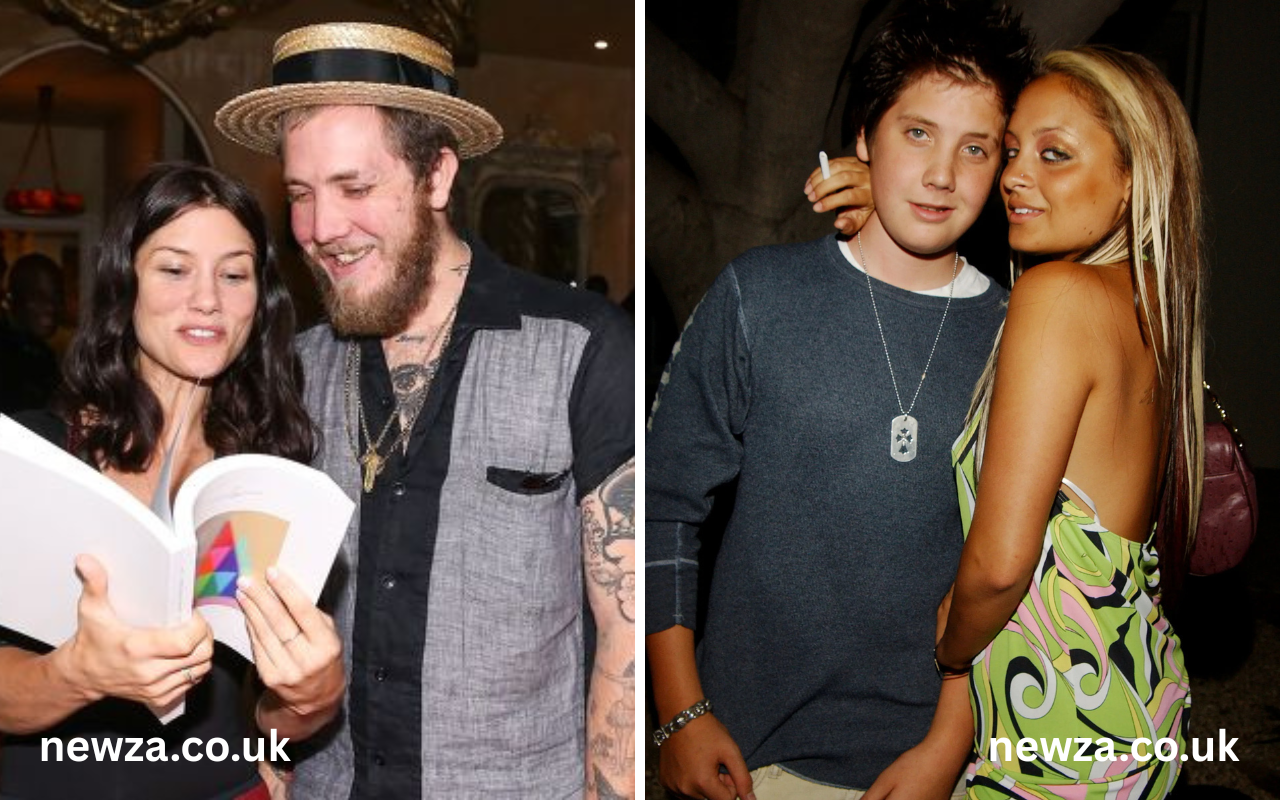
Malcolm Ford: The Untold Story of Harrison Ford’s Musician Son
Malcolm Ford was born on October 3, 1987, in New York City, into a world of unimaginable fame. As the second child of legendary actor Harrison Ford and acclaimed screenwriter Melissa Mathison, he had every door in Hollywood wide open to him. Yet, from a very young age, Malcolm displayed a striking disinterest in the entertainment industry that made his parents household names. While his father was piloting the Millennium Falcon or cracking a whip as Indiana Jones, Malcolm was growing up far from the red carpets in Jackson Hole, Wyoming. This unique upbringing, sheltered from the constant glare of paparazzi, shaped him into a private individual who values authenticity over attention. He understood early on that the Ford name came with a heavy weight, one he was not sure he wanted to carry in the same way his father did.
Instead of chasing acting roles, Malcolm gravitated toward the raw, unfiltered world of music. Specifically, he found solace in the deep, emotional grooves of American blues music. Unlike the polished pop of the 2000s, blues offered him a space to express frustration, joy, and struggle without pretense. This choice was not a rebellion against his father but rather a search for his own identity. In a 2010 interview, he reportedly mentioned that acting felt like wearing someone else’s clothes, while music felt like his own skin. This distinction is crucial to understanding his entire career trajectory. He did not want to be the next Harrison Ford; he wanted to be the first Malcolm Ford.
Today, Malcolm is best known as the frontman of The Dough Rollers, a band that earned a deal with Jack White’s prestigious Third Man Records. However, his story involves much more than music. It includes a well-documented struggle with substance abuse, a life-changing stint in rehabilitation, and a deep, enduring bond with his mother, Melissa Mathison. In the following sections, we will explore the high points and low points of his life, from his childhood in Wyoming to his current status as a private citizen who occasionally steps into the spotlight. Malcolm Ford’s life proves that being born into fame does not guarantee a desire for it, and sometimes, the most courageous act is choosing a quiet, authentic path.
Early Childhood in the Shadow of Stardom
Living as the child of a global superstar like Harrison Ford presents unique challenges that most people never consider. For Malcolm, his early years were defined by a sharp contrast between public perception and private reality. While the world saw Han Solo, Malcolm saw a dad who helped with homework and valued hard work over handouts. Harrison and Melissa made a conscious decision to raise their children away from the Los Angeles frenzy. They chose Jackson Hole, Wyoming, a small, rugged town known for its natural beauty and conservative values. Here, Malcolm could ride bikes, go to school, and play without being recognized as a celebrity offspring. This environment gave him a sense of normalcy that many other star kids never experience.
However, the weight of the Ford name was impossible to escape entirely. Malcolm has two older half-brothers from his father’s first marriage, Ben and Willard Ford, as well as a younger sister, Georgia. The family dynamic was loving but complex, especially as his parents’ marriage began to strain. In the early 2000s, when Malcolm was a teenager, his parents separated, finalizing their divorce in 2004. This period was deeply painful for him, as he had to watch his family disintegrate under the pressure of Hollywood schedules and personal differences. He coped in unhealthy ways, which we will discuss later, but the foundation of those early Wyoming years gave him the resilience to eventually fight back. The quiet mountains of his childhood served as a mental anchor he would return to during harder times.
Despite the eventual divorce, Malcolm speaks fondly of his mother, Melissa Mathison, who wrote beloved films like “E.T. the Extra-Terrestrial.” She was the creative, soft-spoken counterbalance to Harrison’s intense public persona. Melissa encouraged Malcolm’s artistic side, buying him his first records and taking him to small folk concerts. She saw his love for music before he even picked up a guitar. In fact, there is a known story in family circles that young Malcolm would tap rhythms on the dinner table constantly, driving his father mildly crazy but making his mother smile. These small moments reveal a child who was always destined for a creative outlet, just not the one the world expected.
The Formation of The Dough Rollers
The year 2008 marked a pivotal turning point in Malcolm Ford’s life. Living in New York City, he crossed paths with Jack Byrne, the son of actors Gabriel Byrne and Ellen Barkin. The two young men bonded instantly over a shared love for obscure blues records and old video games. Neither of them wanted to be actors, but both felt the pull of artistic expression. Jack taught Malcolm how to play basic guitar chords, and within weeks, they were jamming in a tiny, cramped apartment in Manhattan. What started as a casual friendship quickly evolved into a serious musical partnership. They named their duo The Dough Rollers, a slang term that evokes the image of traveling hobos and train-hopping bluesmen from the 1930s.
The early sound of The Dough Rollers was deliberately raw and lo-fi. They recorded their first demo on a cheap tape recorder, capturing the hiss and crackle that audiophiles love. This was not music for radio Top 40; it was music for dive bars and late-night basement shows. They soon added vocalist and fiddler Julia Tepper to the lineup, which gave their sound a distinct folk-bluegrass flavor. The chemistry between Malcolm and Julia was electric, with her high, mournful fiddle weaving around his gravelly, whiskey-soaked vocals. Critics who saw their early shows noted that Malcolm did not try to be a rock star; he simply stood there, eyes closed, letting the blues flow through him. It was authentic, and authenticity is rare in New York’s competitive music scene.
By 2010, The Dough Rollers had released their self-titled debut album, which featured ten original tracks. The album received modest but positive reviews, with praise directed at the band’s stripped-back production and Malcolm’s surprising vocal maturity. He sang about heartbreak, travel, and hard living, themes that resonated with audiences who had no idea his father was a movie star. In fact, for the first few years, many fans did not connect Malcolm Ford to Harrison Ford. He deliberately used only his first name on flyers and avoided mentioning his family in interviews. This decision was strategic: he wanted the music to be judged on its own merit. The Dough Rollers became known as a hard-working band, not a celebrity side project, which is a rare achievement in the age of nepotism.
Signing with Third Man Records and Major Tours
A significant breakthrough occurred when The Dough Rollers caught the attention of Jack White, the legendary frontman of The White Stripes and owner of Third Man Records. Jack White is known for his obsessive love of analog recording and authentic blues music, so the band’s raw sound was a perfect fit. In 2014, the label announced that The Dough Rollers had officially joined the Third Man roster, a major validation for Malcolm and his bandmates. Being on Third Man Records meant they were part of a family that included artists like The Raconteurs, The Dead Weather, and country singer Margo Price. It was not just a record deal; it was an artistic endorsement from one of the most respected figures in modern rock.
Under Third Man, the band released the “Gone Baby Gone” EP, which featured four tracks that showcased a more polished yet still gritty sound. The EP was recorded entirely on analog tape, with no digital editing, which forced the band to perform flawlessly in the studio. Malcolm later admitted that this process was terrifying but ultimately rewarding, as it captured their live energy perfectly. Following the release, The Dough Rollers embarked on extensive touring, including opening slots for some of the biggest names in music. They supported Bob Dylan on several dates, as well as John Mellencamp and Queens of the Stone Age. Playing for thousands of people who came to see the headliners was a trial by fire, but Malcolm rose to the occasion.
These tours taught Malcolm invaluable lessons about endurance and professionalism. He learned how to manage his voice on long drives, how to deal with broken equipment, and how to win over a skeptical crowd. One memorable story from the road involves a show in Tulsa, Oklahoma, where the audience booed the band before they played a single note, simply because they were unknown. By the end of their forty-minute set, the same crowd was cheering for an encore. Malcolm credits these moments as his proudest achievements, far more meaningful than any red carpet appearance. He proved that he could earn respect through sweat and talent, not through his last name. The touring life was grueling, but it forged him into a true performer.
Personal Struggles with Addiction and Recovery
Behind the scenes of the rising musical success, Malcolm Ford was fighting a very private and very serious battle. The divorce of his parents, finalized in 2004 when he was just seventeen, hit him harder than he let on publicly. To cope with the feelings of loss and anger, he turned to drugs and alcohol. Reports from that period indicate that his substance use escalated quickly, leading to a deep depression that worried his family. This is a common but tragic story among celebrity children, who often feel they must hide their pain behind a smile. Malcolm, however, was fortunate to have a father who recognized the signs and refused to ignore them. Harrison Ford, despite his busy filming schedule, intervened directly.
In the mid-2000s, Malcolm checked into a rehabilitation facility to address his addiction. This was not a quick fix; recovery took months of hard, uncomfortable work. He attended therapy sessions, including family therapy with his father, where they discussed the impact of the divorce and the pressures of fame. It was during this rehab period that Malcolm rediscovered his love for music as a healing tool. Instead of using drugs to escape his emotions, he began writing songs to process them. He later told a close friend that the guitar became his therapist. The twelve-bar blues structure, with its predictable pattern of tension and release, gave him a framework to understand his own chaotic feelings. Recovery gave him a second chance at life.
Since completing rehab, Malcolm has maintained a low profile regarding his sobriety, but those close to him say he has remained clean and focused. He does not preach or lecture about addiction, but he leads by example. His decision to step away from the party scene of New York and focus entirely on The Dough Rollers was a direct result of his recovery. He has stated in rare interviews that he is grateful for the struggle because it taught him resilience. Three key lessons from his recovery include: first, that asking for help is a sign of strength, not weakness. Second, that art can save your life if you let it. And third, that family, despite its flaws, is worth fighting for. These principles guide his daily life.
The Tragic Loss of Melissa Mathison
Perhaps the most devastating event in Malcolm Ford’s adult life was the death of his mother, Melissa Mathison, in November 2015. She was sixty-five years old and had been battling neuroendocrine cancer, a rare and aggressive form of the disease. Melissa was not just a mother to Malcolm; she was his closest confidant and his biggest artistic supporter. She had read his early lyrics, attended his tiny club shows, and always believed in his talent. Her passing left a void that music alone could not fill. In the months following her death, Malcolm largely disappeared from the public eye, canceling several tour dates and going silent on social media. He needed time to grieve privately, away from the curiosity of fans and reporters.
The loss was compounded by the fact that Melissa had been the stabilizing force in his life. She was the one who encouraged him to pursue music when others told him to get a “real job.” She understood the artistic temperament because she had one herself. After her death, Malcolm paid tribute to her in the only way he knew how: through song. Several unreleased tracks from The Dough Rollers’ later sessions are believed to be directly inspired by his grief, though he has chosen not to release them commercially. He told a friend that some songs are too personal to share with the world, and that is okay. Grief, he learned, does not have to be public to be valid. He keeps her memory alive in private moments, often visiting her favorite spots in Wyoming.
This tragedy also changed Malcolm’s relationship with his father, Harrison Ford. The two men, who had already grown closer during Malcolm’s recovery, became even more inseparable after Melissa’s death. They reportedly speak several times a week and spend holidays together at Harrison’s ranch in Wyoming. Losing a wife and a mother simultaneously created a unique bond between father and son, one based on shared loss rather than obligation. Malcolm has said that watching his father grieve taught him that strength includes vulnerability. Harrison never hid his tears or his pain, showing Malcolm that it is human to break down. Today, Malcolm honors his mother’s legacy by continuing to create art on his own terms, just as she always encouraged.
Physical Resemblance and Tattoo Collection
One of the first things people notice about Malcolm Ford is his striking physical resemblance to his famous father. He has the same square jaw, the same intense brown eyes, and the same crooked smile that made Harrison a heartthrob in the 1980s. When Malcolm performs on stage, many photographers have captured angles where he looks like a young Indiana Jones holding a guitar instead of a whip. However, Malcolm has never tried to capitalize on this resemblance. In fact, he often does the opposite. While Harrison Ford is known for his clean-cut, ruggedly handsome look, Malcolm has covered his body in extensive tattoos, creating a visual identity that is entirely his own.
His tattoo collection is impressive and deeply personal. He has full sleeves on both arms, featuring traditional American designs like roses, daggers, and swallows. On his left hand, across his knuckles, he has the letters “F.O.R.D” tattooed in bold black ink. This is a cheeky acknowledgment of his family name, but done in a way that feels rebellious rather than reverent. In recent years, he has also added facial tattoos, including small designs near his temple and jawline. These choices have sparked debate among fans, with some praising his boldness and others questioning why he would alter such a famous face. Malcolm has never publicly explained his tattoos, but those close to him say each one represents a specific moment in his life, such as his recovery or a lost friend.
Beyond the ink, Malcolm’s fashion sense also sets him apart from his father. He prefers vintage denim, leather jackets, and worn boots, looking more like a blues musician from the 1970s than a modern celebrity. He rarely wears suits or designer labels, even at red carpet events he attends with his family. When he accompanied Harrison to the premiere of “Star Wars: The Force Awakens” in 2015, he wore a simple black shirt and jeans, standing out precisely because he did not try to stand out. This consistent rejection of Hollywood style norms is a deliberate statement. Malcolm wants people to see him as a musician, not as a model or an actor. His body art and clothing choices are his armor, protecting his authentic self from the expectations of the world.
Net Worth and Financial Independence
Assessing the exact net worth of Malcolm Ford is challenging because he maintains a private financial life, unlike his father who has publicly reported earnings. However, various entertainment