




Caitlin Clark Injury Comeback: Full Recovery Timeline and Team USA Return Explained
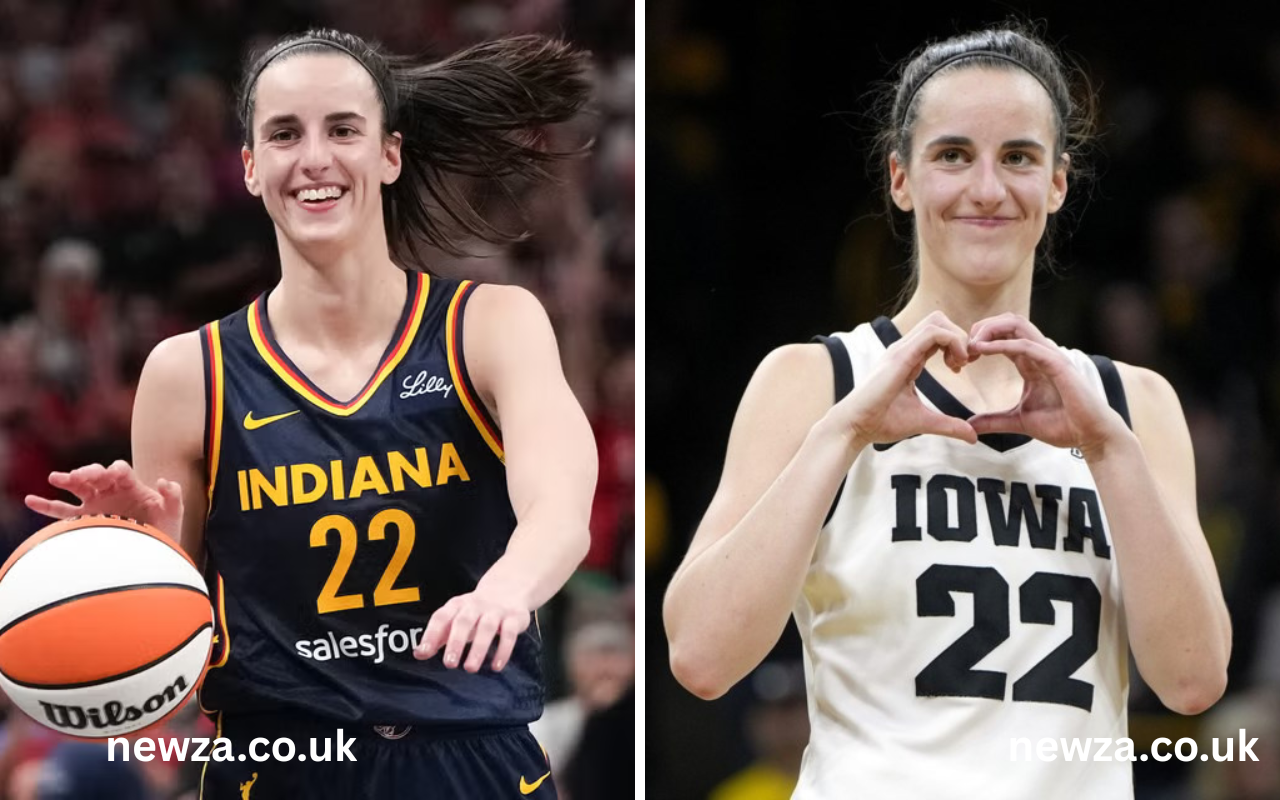
Caitlin Clark is officially back on the basketball court after a frustrating year defined by multiple lower body injuries that sidelined the Indiana Fever superstar for nearly eight months. The young guard, who took the WNBA by storm during her rookie season, Caitlin Clark Injury faced an uphill battle throughout 2025 as her body failed to cooperate despite her best efforts to return. She dealt with a left quadriceps strain early in the season, followed by left and right groin injuries, and finally a severe bone bruise on her left ankle that ultimately forced the Fever to shut her down for the remainder of the campaign. After appearing in only thirteen games, Caitlin Clark Injury Clark made the difficult decision to prioritize long term health over short term gain, a choice that required immense mental strength for a competitor who had never missed significant playing time in her career.
The road to recovery has been anything but easy, requiring countless hours of rehabilitation with the Indiana Fever medical staff and a complete reset of her lower body conditioning. Unlike a typical offseason where players rest before slowly ramping up activity, Clark spent the majority of her time focused on rebuilding the stabilizing muscles in her hips and core to prevent future groin strains. She worked extensively on her movement patterns Caitlin Clark Injury ensuring that she would not compensate for one injury by putting undue stress on another part of her body. This meticulous approach was designed not just to get her back on the floor quickly, Caitlin Clark Injury but to keep her there for the long haul, addressing the root causes that led to the cascade of injuries in the first place.
Now, Clark has been cleared for full contact basketball and has been named to the twelve player Team USA roster for the FIBA Women’s World Cup Qualifying Tournament in San Juan, Puerto Rico. This marks her senior national team debut, an opportunity she missed out on during the 2024 Paris Olympics when she was left off the roster. The tournament, Caitlin Clark Injury running from March eleventh to March seventeenth, will serve as the ultimate test of her conditioning and a proving ground to show that she has returned to her All Star level of play. Caitlin Clark Injury For fans who have followed every update with concern and anticipation, this moment represents the light at the end of a very long tunnel and the beginning of an exciting new chapter.
The Timeline of a Nightmare WNBA Season for Caitlin Clark
The 2025 season began with sky high expectations for Clark and the Indiana Fever after a record breaking rookie campaign that saw them reach the playoffs for the first time since 2016. However, those hopes were derailed almost immediately when Clark began experiencing left leg tightness that was eventually diagnosed as a left quadriceps strain in late May. Caitlin Clark Injury This injury forced her to miss five games, a significant absence for a player who had built her reputation on durability and availability. She returned briefly in June and even dropped a spectacular thirty two point performance against the reigning champion New York Liberty, Caitlin Clark Injury leading many to believe the worst was behind her and that she would pick up right where she left off.
Unfortunately, the relief was short lived as a new set of problems emerged just weeks after that stellar performance. Clark suffered a left groin injury in late June and attempted a comeback in July, but her body continued to rebel against her. Caitlin Clark Injury On July fifteenth, during a game against the Connecticut Sun, she suffered a right groin injury that would ultimately prove to be the beginning of the end for her season. The back to nature groin issues on opposite sides suggested that her body was struggling to find balance and that she was likely compensating for pain in ways that created new problems elsewhere. Caitlin Clark Injury Medical experts noted that this pattern often indicates underlying biomechanical issues that require more than just rest to resolve.
Just as Clark was attempting to ramp up her recovery in August with hopes of rejoining the Fever for a playoff push, disaster struck once again. She suffered a bone bruise on her left ankle during a routine workout, an injury she later described as one of the worst sprains of her entire career. This bone bruise proved to be the final nail in the coffin because it prevented her from testing the stability of her groin. She could not run at full speed or cut sharply without significant pain, making a return to WNBA level competition impossible. On September fourth, the Fever made the inevitable announcement that Clark would not return for the 2025 season, having appeared in only thirteen games while watching her teammates fight through the playoffs without her.
Understanding the Specific Injuries That Kept Clark Sidelined
The complexity of Caitlin Clark’s medical situation lay not in a single catastrophic event but in the frustrating domino effect of multiple lower body injuries that compounded upon one another. The initial left quadriceps strain was a muscle injury affecting explosive movements like driving to the basket and jumping for rebounds, but she managed to recover from that relatively quickly. The real trouble began with the groin strains, Caitlin Clark Injury which are notoriously difficult for basketball players because the sport demands constant lateral movement, sudden stops, and extreme hip flexion. When a player suffers a groin injury, every sideways step becomes a potential trigger for pain, Caitlin Clark Injury and the natural instinct is to alter movement patterns to avoid that discomfort.
This alteration of movement is precisely what likely led to Clark’s secondary injuries. When a player compensates for a groin issue, they often change their footwork and the way they plant and push off, which can put unusual stress on other parts of the kinetic chain. In Clark’s case, that secondary injury was the severe bone bruise in her left ankle. A bone bruise, while sometimes considered less severe than a fracture, can be incredibly painful and slow to heal because it involves micro damage to the bone tissue and the surrounding blood vessels. The location of the bruise on her ankle, combined with the existing groin issues on both sides, created a perfect storm that made any form of high intensity basketball impossible.
Clark noted during her exit interview that the ankle injury was the final obstacle because it didn’t allow her to properly test her groin’s range of motion under game conditions. She explained that she could walk and jog without major issues, but the moment she attempted to make a sharp cut or explode off her left foot for a layup, the pain returned. The decision to shut her down was ultimately a strategic move by the Fever organization, prioritizing her long term health and the future of the franchise over a short term gain that might have risked even more serious damage. This approach, while painful in the moment, has allowed Clark to return to full health rather than becoming stuck in a cycle of recurring injuries.
Life in Recovery and the Eight Month Road Back to Full Health
The time away from the game has been an emotional and physical grind for Clark, who is known throughout the basketball world for her relentless work ethic and competitive fire. Unlike a typical offseason where players take time off to rest their bodies before slowly ramping up activity, Clark spent the majority of the last eight months in a state of controlled and focused rehabilitation. She worked closely with the Fever’s medical and player development staff to rebuild the strength in her entire lower body, focusing heavily on the stabilizing muscles in her hips and core that are essential for preventing future groin strains. This period was not just about healing the bones and muscles but about retraining her movement patterns to ensure she would not fall into the same compensation traps again.
During her exit interview and subsequent media appearances throughout the fall and winter, Clark spoke candidly about the mental toll of the recovery process. She admitted that the hardest part was the feeling of being completely unable to help her teammates while watching the Fever make a surprising and exciting run in the playoffs. There were days when the frustration boiled over, when she questioned why her body was failing her at the exact moment her career was supposed to be taking off. However, she channeled that frustration into discipline, showing up to the practice facility every single day even when she could not participate in basketball activities. She became a student of the game from the sidelines, studying defensive rotations and scouting reports with a level of detail she never had time for when she was playing every night.
Clark utilized the extended time off to focus on aspects of her game that she usually neglects when she is playing and traveling constantly during the regular season. She spent hours working on her mid range floater and finishing through contact at the rim, areas of her game that she had identified as needing improvement after watching film of her rookie season. The December Team USA training camp served as a critical checkpoint in her recovery journey, where she confirmed that she was finally pain free and able to participate in full contact five on five scrimmages without restriction or hesitation. Passing that test gave her the confidence to push harder in her individual workouts, knowing that her body had finally caught up to her ambition.
Officially Back for Team USA and the FIBA World Cup Qualifiers
The official announcement came in early March 2026 when USA Basketball revealed that Caitlin Clark had been fully cleared and was named to the twelve player roster for the FIBA Women’s World Cup Qualifying Tournament in Puerto Rico. This event represents the first major test for the new look USA Basketball roster under the guidance of new head coach Kara Lawson and national team managing director Sue Bird, both of whom have spoken highly of Clark’s work ethic and basketball IQ. For Clark personally, this is a monumental occasion that carries deep emotional weight. While she has represented the United States at various youth levels, this marks her senior team debut, a milestone she has dreamed about since she was a young girl watching the Olympics on television.
The tournament is scheduled to take place in San Juan from March eleventh through March seventeenth, with the United States facing off against several international opponents in a compact and demanding schedule. The team will play multiple games in a short span of time, which will serve as a true test of Clark’s conditioning and her ability to recover quickly between high intensity contests. Clark arrived at the training camp in Miami with a mixture of nerves and excitement, a rare admission from a player known for her swagger and confidence on the court. She told reporters that she expects to have some rust to knock off during the first few minutes of game action, a candid acknowledgment that eight months away from competitive basketball is a long time even for the most talented players in the world.
However, Clark reassured fans that the hard work is done and that she would not have accepted this invitation if she did not truly believe she was ready to compete at the highest level. She emphasized that her goal is not just to participate but to contribute meaningfully to a team that has high expectations for this tournament and for the World Cup in Berlin that follows. The tournament serves a dual purpose for Clark personally, as it allows the United States to qualify for the World Cup, but just as importantly, it allows her to reintegrate into high intensity basketball before the 2026 WNBA season begins. Every minute she plays in Puerto Rico is valuable preparation for the grind that awaits her back in Indianapolis.
A Star Studded Roster Alongside Clark for the Qualifiers
Clark is not returning to a quiet gym or a rebuilding team, she is returning to a locker room filled with the absolute best players on the planet, which will only accelerate her transition back to game speed. The Team USA roster for the qualifiers features a dazzling fusion of rising young stars and established veteran champions who have won Olympic gold medals and WNBA championships. She will be sharing the court with fellow young stars like Paige Bueckers and Angel Reese, creating a dynamic that fans have dreamed about ever since their legendary college battles at UConn and LSU. Additionally, Clark will play alongside Olympic gold medalists such as Kelsey Plum, Jackie Young, Chelsea Gray, and Kahleah Copper, players who have experienced the pressure of international competition and succeeded at the highest level.
The presence of Sue Bird in the front office as a managing director adds an interesting and valuable layer to Clark’s development as an international player. Bird, widely regarded as one of the greatest point guards in the history of basketball regardless of gender, has spoken publicly about the importance of transitioning Clark’s game to the international style of play. The FIBA game is noticeably different from the WNBA, involving different rules regarding goaltending and defensive three seconds, a shorter shot clock in some instances, and often more physical defense without the same level of protection from officials. These differences can be jarring for players who have only ever competed under WNBA or NCAA rules, and having Bird’s guidance is an invaluable resource for Clark as she navigates her first senior team experience.
Playing alongside such high IQ veterans will accelerate Clark’s understanding of international nuances and help her find her role within the team concept. The early chemistry built in the Miami training camp will be vital to their success in Puerto Rico, and reports from camp indicate that Clark has already developed a strong rapport with the other guards on the roster. She has been working extensively on her off ball movement, recognizing that with so many talented scorers on the floor, she will not need to dominate the ball for the offense to succeed. This willingness to adapt and learn speaks to her maturity as a player and her genuine desire to be a part of something bigger than individual statistics.
Adjusting Her Game and the Evolution of Caitlin Clark as a Scorer
The extended time off has not just been about healing the body, it has been about evolving the game to ensure that when Clark returns, she returns as a more complete and versatile offensive player. She entered the WNBA known primarily for her incredibly deep three point shooting and her pinpoint passing vision, a style that dominated the NCAA and translated well to the professional level during her rookie season. However, the WNBA, and now international basketball, requires a more versatile scoring arsenal because defenses are too smart and too athletic to be beaten by the same move over and over again. One of the most discussed critiques of Clark’s early career was her statistical lack of production in the mid range area, the space between the three point line and the paint.
In her rookie season, only a very small percentage of her shot attempts came from three to ten feet, an area often referred to as the floater range or the short mid range. Clark has openly acknowledged this gap in her skill set during various interviews, admitting that she used to feel genuinely uncomfortable taking mid range jump shots. She preferred to either get all the way to the rim for a layup or step back behind the three point arc for a deep jumper, viewing the mid range as an inefficient shot that did not fit her analytical approach to the game. However, as the WNBA continues to evolve and defenses become more sophisticated, teams are forcing drivers off the three point line and funnelling them into the mid range, making that shot a necessary weapon rather than a statistical inefficiency.
During her rehabilitation, Clark reportedly spent hundreds of hours working on a one handed floater off the glass and the pull up jumper from the elbow, two shots that were essentially absent from her arsenal before. When Clark returns to the court in Puerto Rico, scouts from opposing WNBA teams will be watching closely to see if she utilizes this new shot selection. If she has successfully added a consistent floater to her game, it will make her virtually unguardable, as defenders can no longer simply sag off her drives to clog the paint or run her off the three point line without fear of a pull up jumper. This evolution from a two level scorer to a three level scorer is the natural progression for any great shooting guard, and Clark has used her injury layoff as an opportunity to accelerate that growth.
The Mental Game and Overcoming Adversity with Nervous Excitement
Perhaps the most significant battle Clark has faced throughout this entire process is a psychological one rather than a physical one. For the first time in her life, stretching back to her earliest days in high school, she had to sit and watch her teammates compete without her. From her legendary career at Iowa through her rookie season in the WNBA, she was an iron woman, never missing games due to injury and priding herself on her durability. The constant setbacks throughout 2025 tested her mental resilience in ways that a missed shot or a lost game never could. She spoke openly about the disappointment of not being able to compete in the All Star Game, which was held in her home arena of Gainbridge Fieldhouse, an event she was forced to watch from the sidelines while wearing street clothes.
As she prepares for the qualifiers in Puerto Rico, Clark is actively managing her expectations and being honest with herself about the challenges that remain. She admits that she will likely be nervous when she steps onto the court for her first game, a rare admission from a player known for her swagger and her cold blooded clutch performances in the biggest moments. Clark confessed to reporters that she usually does not get nervous before games, that she has always viewed basketball as a game she loves rather than a source of anxiety. But this situation is different because of the stakes, the long layoff, and the lingering uncertainty about how her body will respond to the full speed demands of international competition.
However, Clark views this nervousness not as a weakness but as a sign that she cares deeply about this opportunity and about representing her country. She knows that the first minute of running around and making a simple pass will likely banish those nerves and replace them with the familiar joy of competition. Her goal is simply to play freely, to trust her body and the work she has put in over the last eight months, and to remember why she loves the game rather than worrying obsessively about the risk of re injury. This balanced approach, acknowledging the fear without being ruled by it, is the hallmark of a mature athlete who has learned hard lessons about the mental side of sports through adversity.
Looking Ahead to the 2026 WNBA Season and Beyond
While the FIBA World Cup qualifiers are the immediate focus for Clark and her fans, the long term goal remains the 2026 WNBA season and the continued rise of the Indiana Fever as a championship contender. The organization has been patiently waiting for their franchise cornerstone to return to full health, and General Manager Amber Cox along with Coach Stephanie White have consistently stated that Clark’s long term health is the absolute priority above any single game or even any single season. With Clark limited to only thirteen games in 2025, the Fever still managed to build chemistry among their other players and compete for a playoff spot, but everyone within the organization understands that their ultimate ceiling is determined entirely by the health and performance of their star point guard.
There is also the looming question of the league’s collective bargaining agreement and the potential for an opt out that could reshape the financial landscape of the WNBA, but for Clark personally, the focus is strictly on basketball and recovery. She has had more time than ever to study film of her own performances and those of her opponents, identifying weaknesses in her game that she previously did not have the bandwidth to address during the chaos of a regular season. If she emerges from the World Cup qualifiers without any physical issues or setbacks, she will have a full offseason and training camp to build on her new mid range skills and to continue strengthening the areas of her body that failed her in 2025.
The expectation among Fever fans and basketball analysts is that the 2026 Indiana Fever will finally look like the team everyone expected to see in 2025, a juggernaut led by an MVP caliber player who has learned hard lessons about pacing herself over a long season and listening to her body when it sends warning signals. Clark has stated that she has no intention of changing her aggressive playing style because that style is what makes her special, but she has learned that being smart about load management and recovery is not a sign of weakness but a necessary part of a long and successful career. The twenty six year old season will be a fascinating test of whether she can blend her natural aggression with the wisdom earned through a year of painful setbacks.
Read More: Jada Clare Barkley: The Inspiring Story of Saquon Barkley’s Daughter
A New Chapter Begins for Caitlin Clark and Women’s Basketball
Caitlin Clark’s return to competitive basketball is bigger than just one player stepping onto the court in Puerto Rico, it represents the resilience of a new generation of athletes who are redefining what is possible in women’s sports. Her absence from the WNBA in 2025 highlighted just how vital she is to the ecosystem of the sport, as television viewership and arena attendance both dipped noticeably without her on the floor, underscoring her status as a once in a generation draw who brings casual fans into the game. Now, as she prepares to wear the USA jersey for the first time as a senior national team member, she carries the hopes of millions of fans who have waited patiently for months to see her signature logo threes and no look passes back in action.
This comeback story is still being written in real time, and the questions about whether she will be the same explosive player after such significant lower body injuries will only be answered when the ball is tipped in San Juan. However, if history has taught basketball fans anything, betting against Caitlin Clark is a foolish endeavor that usually ends with egg on the face of the doubters. She has turned every single challenge in her career into a stepping stone for greater success, from being overlooked by college recruiters to being left off the Olympic team to now fighting back from the first major injuries of her life. The adversity has forced her to slow down, to rebuild, and to refine her craft in ways that a smooth and uninterrupted career never would have required.
As she laces up her sneakers for Team USA in the warm and humid gyms of Puerto Rico, she is not merely returning from an injury, she is ushering in the next phase of her legendary career. This phase promises to be even more spectacular than the last because it is built on a foundation of hard earned wisdom rather than just youthful talent. The logo threes will still fall, the no look passes will still find their targets, and the competitive fire will still burn bright. But now there is something deeper behind the showmanship, a quiet confidence born from surviving the darkest days of rehabilitation and emerging on the other side stronger, smarter, and more grateful for every moment she gets to spend on the basketball court.